
PRP Facial
If you’re ready to achieve revitalized, glowing skin, a PRP facial is a non-surgical, highly advanced treatment that uses your own plasma to smooth fine lines and wrinkles and provide refreshed, bright, skin.
What is PRP (Platelet-Rich Plasma)?
PRP, or Platelet-Rich Plasma, is a gel derived from the plasma in your blood that is rich in blood components called platelets. During a PRP facial treatment, PRP is injected into the skin at target sites to help smooth out fine lines and wrinkles, achieving similar effects as a facial filler.
What makes the PRP facial different from an ordinary facial filler is that platelets are a component of your blood. They naturally stimulate growth and tissue regeneration and have been used for decades to regenerate cells and tissues. When used on the skin, PRP regenerates it, which smooths, tightens and enhances it. The PRP facial is a cutting-edge, highly advanced and effective treatment that regenerates the skin and creates a youthful glow from the inside out.
PRP - A Natural, Powerful Agent to Rejuvenate Your Skin
In the blood, platelets flock to wound sites to promote clotting and tissue regrowth; in PRP, those same platelets are combined with growth factors to promote tissue growth and elasticity in areas that are particularly affected by aging.
Small quantities of your own blood are centrifuged to separate out the red blood cells, the white blood cells, the platelets and the plasma. The platelets are then reintroduced to the plasma to create a gel that not only acts as a filler, but that helps aging skin repair itself from within to eliminate frown lines and crows’ feet.
During a PRP Facial, we use the SkinPen microneedling device to inject PRP into the skin, helping smooth out fine lines and wrinkles and dramatically rejuvenating your face. This treatment went viral when it was made famous by Kim Kardashian, who used the PRP Facial to regenerate and refresh her skin.
Who Can Get PRP?
Almost anyone who wants a natural and non-invasive solution for aging skin is a candidate for PRP. This includes patients with uneven skin tone, acne scars, hyperpigmentation, fine lines, wrinkles and other signs of aging.
Because the platelets are derived from your own blood, there is very little risk of reaction, and the actual process of injecting the Platelet-Rich Plasma is even less invasive than Botox. PRP is particularly good for younger patients who want to get a head start on rejuvenating their skin with a solution that will look natural and youthful.
PRP isn’t just for facial treatments. Patients experiencing hair loss are also candidates for PRP treatments. Men or women who are experiencing hair loss can get PRP therapy in the scalp to stimulate follicles and promote hair regrowth. We recommend three treatments spaced one to two months apart to get the most out of your PRP Therapy.
PRP Facial Benefits
Collagen support for firmer-looking skin. Collagen slows with age, and skin can look less firm. A PRP facial uses the growth-factor-rich plasma from your own blood to support your skin's natural collagen activity, helping your complexion look firmer, bouncier, and more resilient over time.
Smoother, more refined texture. Rough patches, enlarged-looking pores, and uneven surface texture can make skin look tired. Clients often choose PRP to help skin feel softer and look smoother and more refined, so makeup sits more beautifully — or feels optional.
More even tone and a natural glow. By supporting healthy-looking skin renewal, PRP can help your complexion look brighter, more even in tone, and naturally radiant — the kind of glow that looks like good skin, not good makeup.
Improved appearance of acne scars. Lingering marks and shallow acne scars can affect how even skin looks long after breakouts have calmed. PRP is frequently chosen to help soften the appearance of these areas over a series of sessions, for a smoother, more blended-looking complexion.
Fine lines softened in appearance. Fine lines around the eyes, mouth, and forehead are often where skin first shows change. PRP supports the skin's own renewal processes, which can help fine lines look softer and less noticeable, for a fresher, more rested appearance.
Under-eye freshness in appearance. The under-eye area is thin and often the first to look shadowed or tired. Many clients love PRP for this zone because it supports a fresher, brighter-looking under-eye appearance without adding volume the way filler does.
Completely natural — it uses your own plasma. There is no synthetic filler and no foreign substance: the treatment is prepared from a small sample of your own blood, processed during your visit. For clients who prefer a natural approach, that simplicity is the appeal.
Pairs beautifully with microneedling. PRP is often combined with microneedling, which creates tiny, controlled micro-channels that help the plasma reach the skin evenly. Your provider can advise if the combination suits you.
What Happens During a PRP Facial?
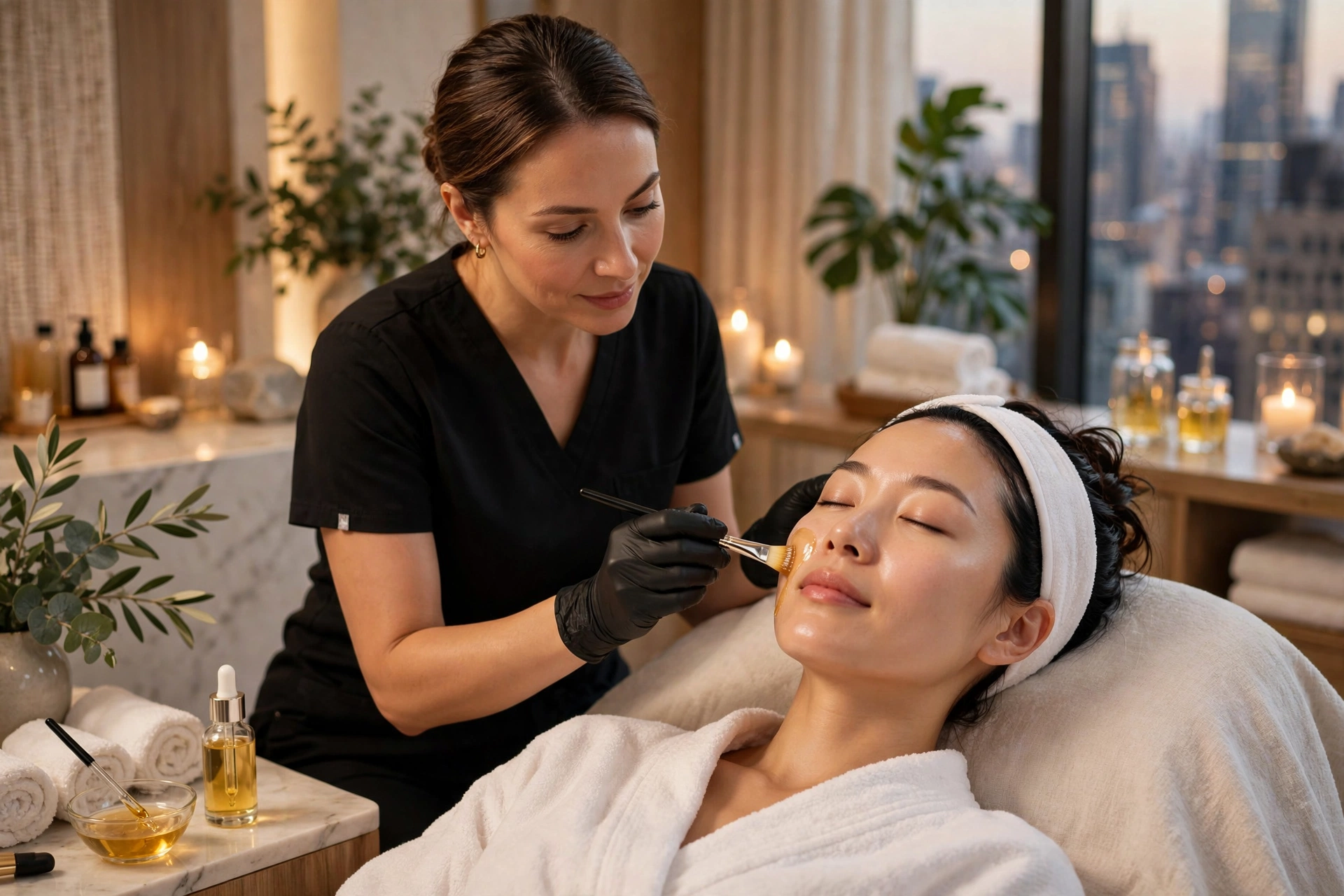
The first step is to draw a small amount of blood. About two teaspoons of blood will be taken from your arm. The platelet-rich plasma is isolated and purified. Powerful growth factors are activated to initiate their healing capabilities. These are then added to the PRP.
The PRP is then applied with the SkinPen microneedling tool. This precision tool can regenerate skin all by itself. The SkinPen microneedling tool uses very tiny needles to cause controlled micro-injuries to the skin. Because the tool is uniquely made, it can be applied very precisely to specific areas or more generally over the face. As the SkinPen generates these micro-injuries, the process is not particularly painful, but you may feel some discomfort. The micro-injuries trigger the production of collagen and elastin, which in turn generate new, fresh skin.
The SkinPen microneedling combined with the power of PRP applied directly onto and into the skin through the micro-incisions significantly boosts the regenerating ability of the skin. The PRP is worked deep into the skin, beginning the process of smoothing wrinkles and firming and tightening the skin. The results are a rejuvenated, toned, smooth and glowing face.
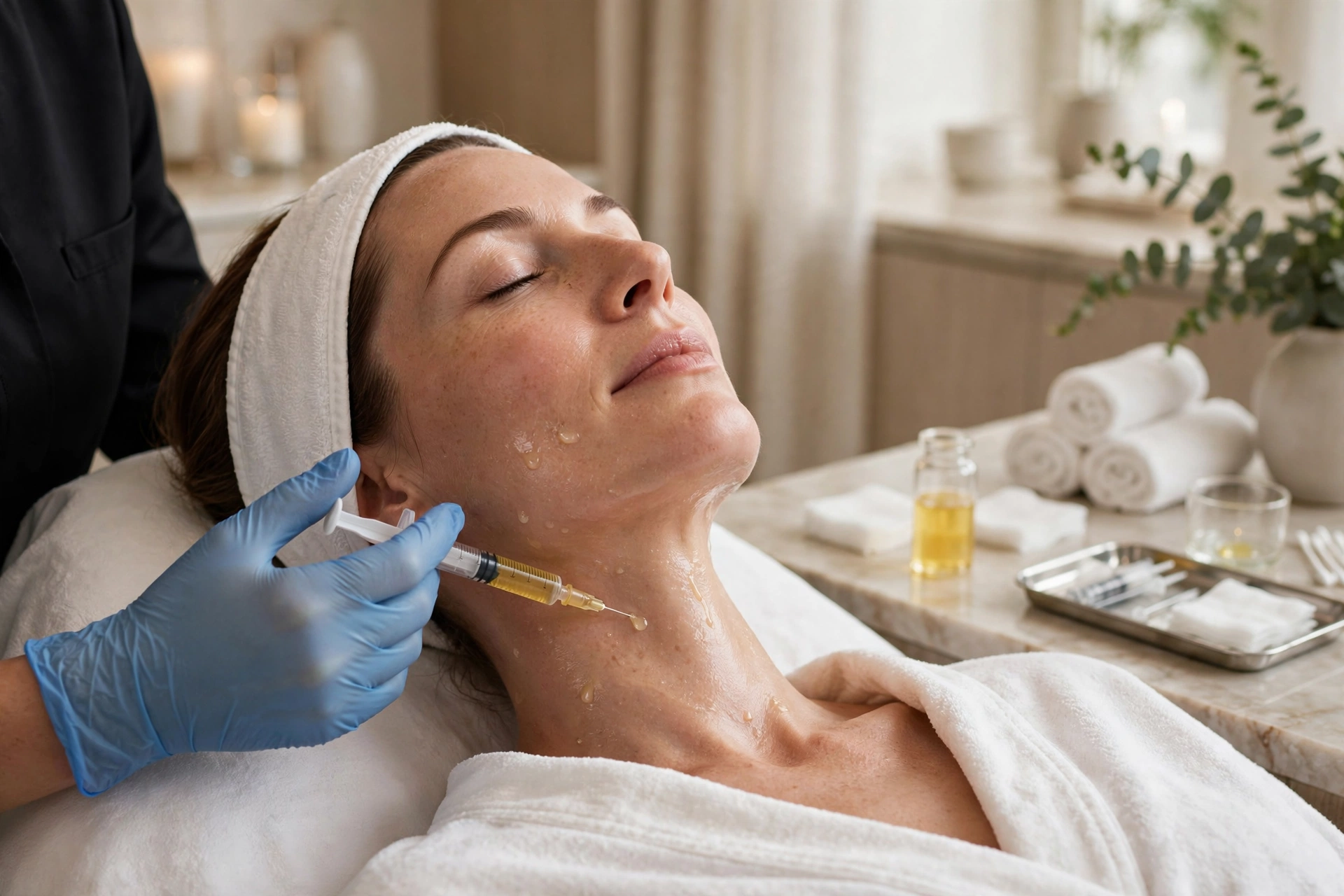
As an added benefit, you can request that Nurse Practitioner Melissa inject PRP directly into areas of concern, just as a facial filler would be injected into targeted areas of the face. The PRP acts as a facial filler would, only the impact is longer-lasting and more regenerative than filler.
How PRP Works, Step by Step
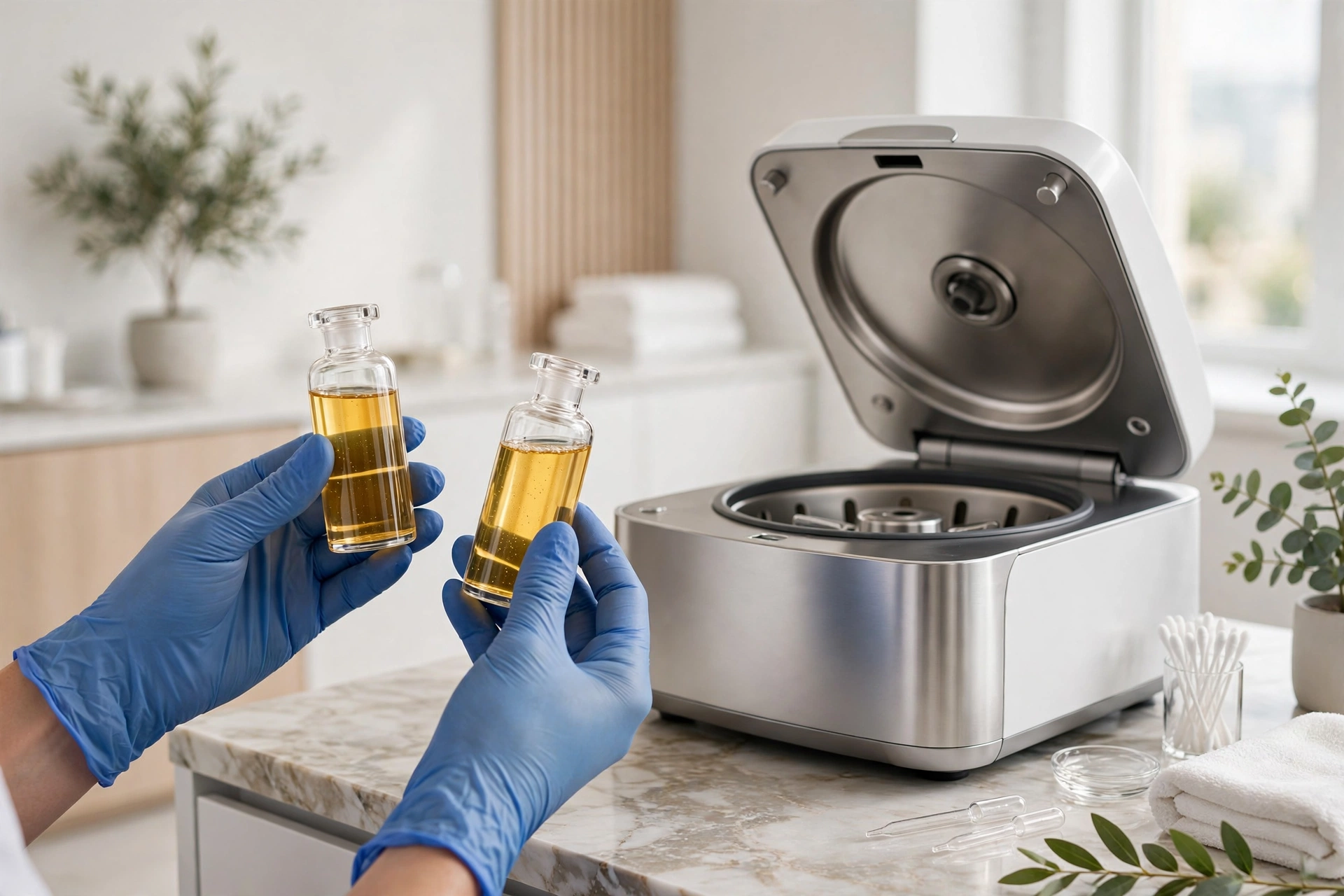
Your appointment follows a simple, elegant process.
Step 1 — The blood draw. Your visit begins like a routine lab visit: a small amount of blood is drawn, usually from your arm. The draw takes only a few minutes.
Step 2 — Centrifuge separation. The sample is placed in a centrifuge, which spins it at high speed. This separates the blood into layers, isolating the platelet-rich plasma from the red and white blood cells.
Step 3 — The golden plasma. The result is a concentrated, golden-colored plasma rich in platelets. This "liquid gold" is the part of your blood that carries growth factors, the natural signaling proteins involved in tissue renewal and repair.
Step 4 — Application to your skin. The plasma is then applied to the face — topically, often paired with microneedling, or placed precisely as your provider recommends for your skin and goals. Skin is cleansed and prepared first.
Why growth factors matter. Platelets are your body's first responders: when tissue needs renewal, they release growth factors that signal surrounding cells to get to work. By concentrating those platelets and applying them to your skin, PRP delivers that natural signal where you want refreshment — which is why results appear gradually and look like your own skin, only fresher. Individual results vary.
Why Choose Eureka for Your PRP Facial in NYC
Eureka Body Care & Spa is a Midtown Manhattan med spa at 303 5th Ave, 4th Floor — Room 407, New York, NY 10016 — easy to reach from work or home. Inside, the pace is calm and personal, never rushed or clinical-cold.
Our experienced team performs aesthetic treatments every day, and every PRP visit begins with a personal consultation. We look at your skin, listen to your concerns, and recommend a plan that fits your features and your comfort level.
Our philosophy is natural-looking results. We aim for skin that looks like yours on its very best day — rested, luminous, and refreshed — never overdone. If you are also curious about PRP for the face and neck, explore our PRP Injections with Mesotherapy Face & Neck treatment, or book your appointment and let us build your plan. Call (212) 858-0706 or text (833) 255-9387 — booking is also available at https://eureka-body-care-inc.square.site/.
Your Results Timeline

PRP works with your skin's natural renewal cycle, so results unfold gradually rather than overnight. Here is what most clients can generally expect:
Days 1–2. Skin may look slightly pink or flushed and feel a little sensitive or tight, similar in appearance to mild sun exposure. Most clients return to normal routines quickly.
Week 1. Any initial flush settles, and many clients notice their skin already looks a touch fresher and more hydrated, with a healthy-looking glow.
Weeks 3–6. This is when the deeper work shows: as collagen activity builds, skin typically looks firmer, smoother in texture, and more even in tone.
Months 2–3. Results usually reach their most noticeable point in this window, with the complexion looking refreshed, refined, and naturally radiant.
How long results last. Improvements commonly last for many months — often around a year, though this is approximate and individual results vary with age, skin condition, and lifestyle. A series of sessions spaced several weeks apart is often recommended for the most noticeable change, followed by occasional maintenance.
Are There Risks?
Any procedure comes with risks, but Platelet-Rich Plasma Therapy is one of the safest and least invasive ways of achieving a natural-looking facelift. Complications with facelifts and fillers are usually because your body reacts to most foreign substances, which can cause swelling and discomfort. With PRP, the plasma that is injected is derived from your own blood. The body doesn't react to it as a foreign substance because markers in the platelets tell your body that the plasma is safe and familiar. This makes PRP a particularly attractive option if you have previously experienced side effects with facial fillers.
Of course, there are still factors that can make a patient susceptible to experiencing adverse effects from PRP. If you have a clotting disorder, certain blood-borne conditions, or particularly sensitive skin, you may not be a good candidate for PRP. Schedule a complimentary consultation at Eureka Body Care and Spa to find out if PRP is the right choice for your facial rejuvenation.
PRP Facial FAQ
How long is a PRP facial appointment? Plan for roughly an hour, including the blood draw, processing your plasma, preparing your skin, and the treatment itself. Your exact timing will be confirmed when you book.
Does a PRP facial hurt? Most clients describe mild discomfort — brief pinching or pricking sensations — rather than pain. Comfort measures are discussed beforehand, and our team works gently to keep the experience relaxed.
Is there downtime? Downtime is usually minimal. Temporary pinkness, warmth, or slight sensitivity is common for a day or two, and most clients return to normal activities quickly.
How many sessions will I need? Some clients are happy after one session, but a series — often three sessions spaced several weeks apart — is commonly recommended for the most noticeable improvement, followed by maintenance. Your provider will advise based on your skin.
Who should skip or postpone a PRP facial? It may not be suitable if you are pregnant or breastfeeding, have a blood or platelet condition, an active skin infection, or certain medical conditions. Share your health history at your consultation so we can confirm suitability.
When will I see results? A fresher glow can appear within the first week, while firmer, smoother-looking skin typically develops over the following weeks, often looking its best around months two to three. Individual results vary.