
Sport Massage in NYC: Smarter Recovery for Active Bodies in Midtown
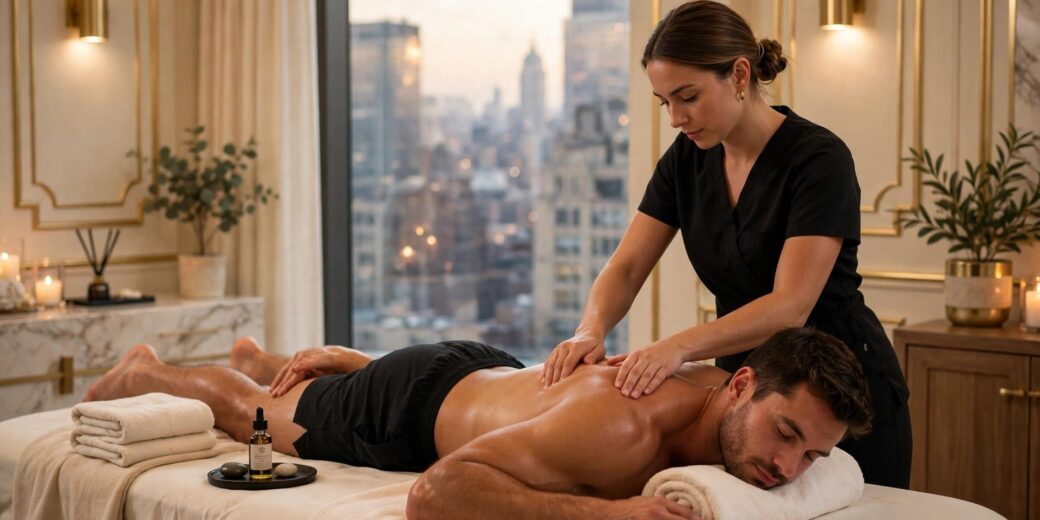
A sport massage is a focused, performance-minded massage that targets the muscles you actually use — to help you recover faster between workouts, move more freely, and stay ahead of the tightness that builds into soreness. At Eureka Body Care & Spa in Midtown Manhattan, sport massage is not reserved for professional athletes. It is for runners logging miles in Central Park, lifters, cyclists, tennis and pickleball players, dancers, martial artists, and the large New York group in between: people who train a few times a week and sit at a desk the rest of the time. The work blends firmer, specific pressure with stretching and joint movement, tailored to your sport, your training cycle, and the areas that are working hardest. You can see the treatment on our sport massage page and book an appointment when you are ready.
What Is Sport Massage, Exactly?
Sport massage draws on several techniques — deep, specific strokes, cross-fiber work on tight bands, trigger-point pressure, and assisted stretching — and applies them with a goal: supporting the muscles, tendons, and connective tissue involved in your activity. Where a relaxation massage aims for an even, full-body unwind, a sport massage is deliberately uneven. It spends more time where you need it — calves and hamstrings for a runner, shoulders and forearms for a climber or tennis player, hips and lower back for almost everyone who both trains and sits.
Timing matters, too. A session before an event is usually lighter and more invigorating, focused on warming tissue and improving range of motion without leaving you sore. A session after training or competition is slower and more restorative, aimed at easing built-up tension and helping tight areas let go. A regular maintenance session between events is where most active clients get the most value: steady work that keeps small restrictions from becoming the reason you skip a week.
Benefits of Sport Massage
Faster-feeling recovery between sessions. Hard training leaves muscles tight, tender, and shortened. Focused bodywork helps ease that post-workout tension, supports healthy circulation to worked areas, and leaves most clients feeling looser and more ready for the next session. It is recovery you can feel in your next warm-up.
Better flexibility and range of motion. Assisted stretching and sustained work on shortened tissue can help joints move through a fuller, more comfortable range — a deeper squat, a freer shoulder, a stride that feels less restricted. That freedom of movement is useful in sport and in ordinary life, from reaching overhead to turning to check a blind spot.
Attention to overuse patterns before they sideline you. Repetitive movement loads the same tissues in the same way. A therapist working regularly on runners, lifters, or racket-sport players learns where those patterns show up — the outside of the thigh, the Achilles and calf complex, the rotator cuff, the forearm extensors — and can work those areas while they are still just tight, not yet painful.
Relief for the desk-athlete overlap. Many Midtown clients train hard for an hour and then sit for nine. Sport massage addresses both halves: the training load in the legs and shoulders, and the desk load in the neck, upper back, and hip flexors. It is often a better fit than a purely relaxing treatment for people who recognize themselves in that description.
Mental reset. Training is a stressor, even when it is a welcome one. An hour of focused, quiet bodywork calms the nervous system and improves the sense of rest — and better rest is where adaptation to training actually happens.
Sport Massage vs. Deep Tissue Massage: What Is the Difference?
The two are close relatives, and at Eureka you can blend elements of both in one session — but the intent differs. Our deep tissue massage works slowly and firmly into deeper muscle layers across the areas of chronic tightness you name, whether or not you play a sport. Sport massage adds the training lens: which muscles your activity loads, where you are in your training week, and techniques like stretching, compression, and movement that a general deep tissue session may not include.
If your main complaint is a chronically stiff back and shoulders from work, deep tissue is an excellent choice. If your tightness follows your training — sore quads after intervals, tight calves in a mileage build, a shoulder that complains after serving practice — sport massage is the more targeted pick. Not sure? Tell us how you train when you book, and we will steer you to the right table. You can compare all options on our massages page.
What to Expect at Your Visit
Arrive a few minutes early and tell your therapist three things: your sport or training, any areas that feel tight, tender, or restricted, and whether you have an event coming up or just finished one. That brief conversation shapes the whole session — pressure, pace, and where the time goes.
During the treatment, expect a mix of firmer, specific work on the loaded muscle groups and guided stretching, with professional draping throughout and only the area being worked on uncovered. Some moments on genuinely tight tissue can feel intense; speak up freely — “good pressure” should feel productive, never like something you have to endure in silence. Your therapist will adjust in real time.
Afterward, most clients feel looser and lighter, and occasionally mildly tender in worked areas for a day, similar to the feeling after a good workout. Drink water, keep the rest of the day’s movement gentle if the session was deep, and avoid scheduling your hardest workout immediately after a restorative session. If you are recovering from an injury, are pregnant, or are under care for a medical condition, mention it when booking — sport massage supports training and everyday comfort, but it is not a substitute for medical diagnosis or treatment, and your session can be adapted appropriately.
When to Book: Before, After, or Between Workouts?
Maintenance (most popular): Every two to four weeks during a training block keeps flexibility up and tightness from accumulating. This is the rhythm regular runners and lifters at Eureka tend to settle into.
Pre-event: One to three days before a race or competition, kept light and specific — the goal is to arrive loose and fresh, not worked-over. Avoid trying a deep session for the first time the day before an event.
Post-event: Two to four days after a big effort, once the sharpest soreness has settled, a restorative session helps ease residual tightness and feels like a proper closing chapter to the training cycle.
After a layoff: Returning to training after time away is when tightness surprises people. A session in your first week or two back helps you feel where you stand and move more comfortably while you rebuild.
Before you book, check our Monthly Specials page — seasonal offers sometimes include massage, and it takes ten seconds to look.
Frequently Asked Questions
Do I have to be an athlete to book a sport massage? No. Most sport massage clients in Midtown are recreational — they run, lift, cycle, play a racket sport, or train in a gym a few times a week, and many also sit at a desk all day. If your tightness follows your activity, this is the right treatment, whatever your level.
How is sport massage different from deep tissue massage? Deep tissue focuses on firm, slow work into deeper layers wherever you carry chronic tension. Sport massage adds a training focus — the muscle groups your sport loads, your place in the training week, and techniques like assisted stretching and compression. The two overlap, and your therapist can blend them.
Should I book before or after a workout or race? For regular training, book on a rest day or after a session, not immediately before a hard workout. Before a race, choose a light session one to three days out; after a race, wait two to four days until the worst soreness eases, then book restorative work.
Will a sport massage be painful? It can feel intense on genuinely tight tissue, but it should never feel like pain you must endure. Pressure is adjusted continuously — tell your therapist what you are feeling, and the work will stay in the productive range.
How often should I get a sport massage? During an active training block, every two to four weeks works well for maintenance. In lighter training periods, a monthly session or booking when tightness builds is a reasonable rhythm. Your therapist can suggest a cadence based on how your body responds.
Book a Sport Massage in Midtown NYC
Train hard, recover deliberately. A focused sport massage helps you stay loose, move freely, and keep showing up for the activity you love. Visit Eureka Body Care & Spa, 303 5th Ave, 4th Floor — Suite 407, New York, NY 10016. Call us at (212) 858-0706, text (833) 255-9387, or book your appointment online.